 Bloom Journal
How to choose a journaling app
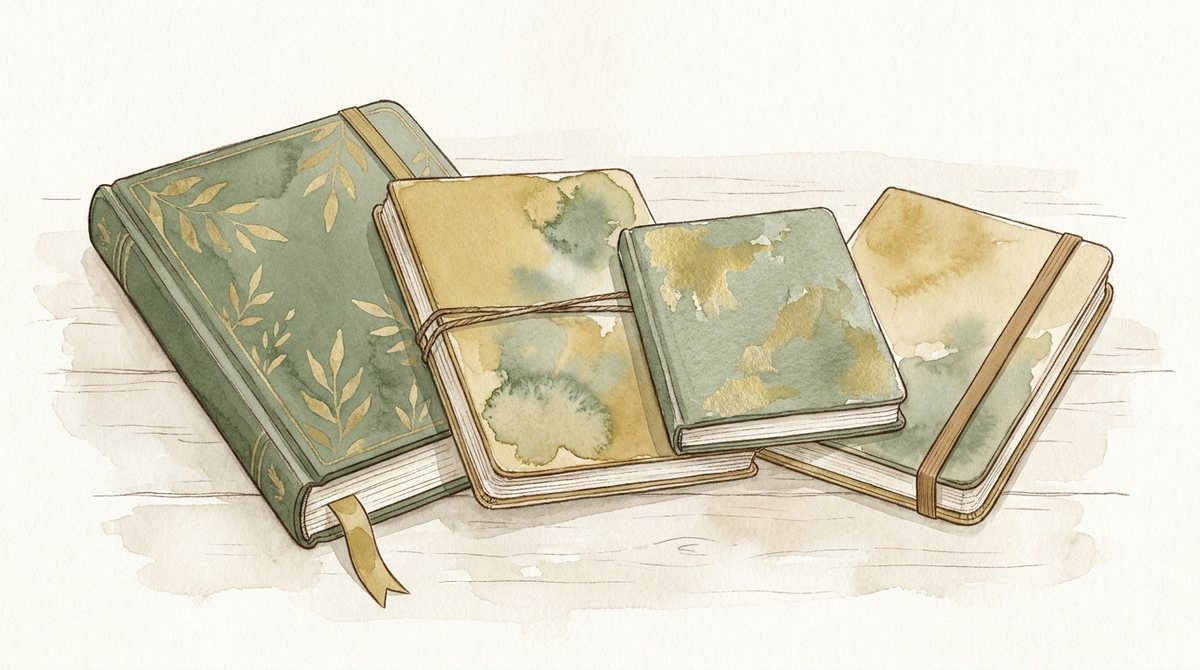
Pick by how you actually record a day — writing, tapping or talking — then ask six questions: where your words live, what leaves your device, what a missed day costs you, whether you can take your journal out, what the free tier really is, and whether the app respects your attention. The right app is the one you will still open in March.
Which kind of journaler are you?
Journaling apps look interchangeable in a store listing and are not. They split into a few honest families, and the best app in the wrong family will not survive your first busy week.
- Classic text journals (Day One is the best-known) are built for people who like writing and want a well-organised archive: entries, photos, search, years of history. If you already write easily, this family fits.
- Mood trackers (Daylio is the classic) replace writing with taps: pick a mood, pick activities, done in ten seconds. Honest fit for people who want data about their days and genuinely do not want to write. If you want the writing itself, a tracker will feel hollow within a month.
- AI conversation journals (Rosebud is the prominent one) interview you: you write or talk, the app asks questions back. Fits people who process out loud and want a responsive companion. It also means your words are part of an ongoing AI conversation, so read the privacy page twice.
- Illustrated journals turn the entry into something you keep — in Bloom’s case, a watercolour painted from your words. Fits people who need a reason to come back that is warmer than a graph: you write because something beautiful comes back. We wrote a separate guide to this family.
The six questions that matter
- Where do your words live? On the device, in a cloud account, or only in the cloud? A journal is the most private document you will ever produce; the answer should be easy to find, and “on your phone unless you choose otherwise” is the strongest one.
- What leaves the device, and when? Any app with AI features sends something somewhere. The honest ones name the sentence: what is sent, to whom, to do what. If you cannot find that sentence in the privacy policy, assume the answer would not flatter the app. We wrote more on this in how private is a journaling app, really?
- What does a missed day cost you? Some apps quietly reset everything you built, which is how one bad Tuesday ends a habit. Look for a streak that bends: planned rest, vacation pauses, no guilt. The habit research says missed days are normal and survivable; your app should agree.
- Can you leave with your journal? Export should be free, complete and in a format you can open elsewhere. An app that holds your own words hostage behind a paywall has told you what it thinks of you.
- What is the free tier, really? Some free tiers are a usable product; some are a timed demo. The question to ask: can you keep journaling, forever, without paying? Whatever is limited should be the extras, never the writing.
- Does it respect your attention? No ads inside your own diary, no feed, no social layer you did not ask for, notifications that invite rather than nag.
Red flags worth walking away from
- A countdown timer or a “sale ends tonight” banner inside a wellbeing app.
- Export locked to the paid tier, or missing entirely.
- A privacy policy that never says what its AI features send, or to whom.
- Streak mechanics that punish rather than forgive.
- An account required before you have written a single word.
Where Bloom Journal fits
Bloom is an illustrated journal for iPhone and Android: you write a few lines and a watercolour is painted from them, one painting per entry, yours to keep. Against the six questions: your journal lives on your phone by default, encrypted before it is written down, and cloud is a choice; to paint an entry, the text of that entry is sent to our AI providers, and the Privacy Policy says so in one plain sentence; the streak includes two automatic rest days a month and a Rest mode for holidays; export is free, complete and always available; writing is never limited on any plan, free forever; and there are no ads, no feed and nothing social. If you want tap-based mood data or an AI that talks back, one of the other families will fit you better, and we mean that.
The right journal is the one that is still open in March.