 Bloom Journal
Journaling apps that turn your words into art
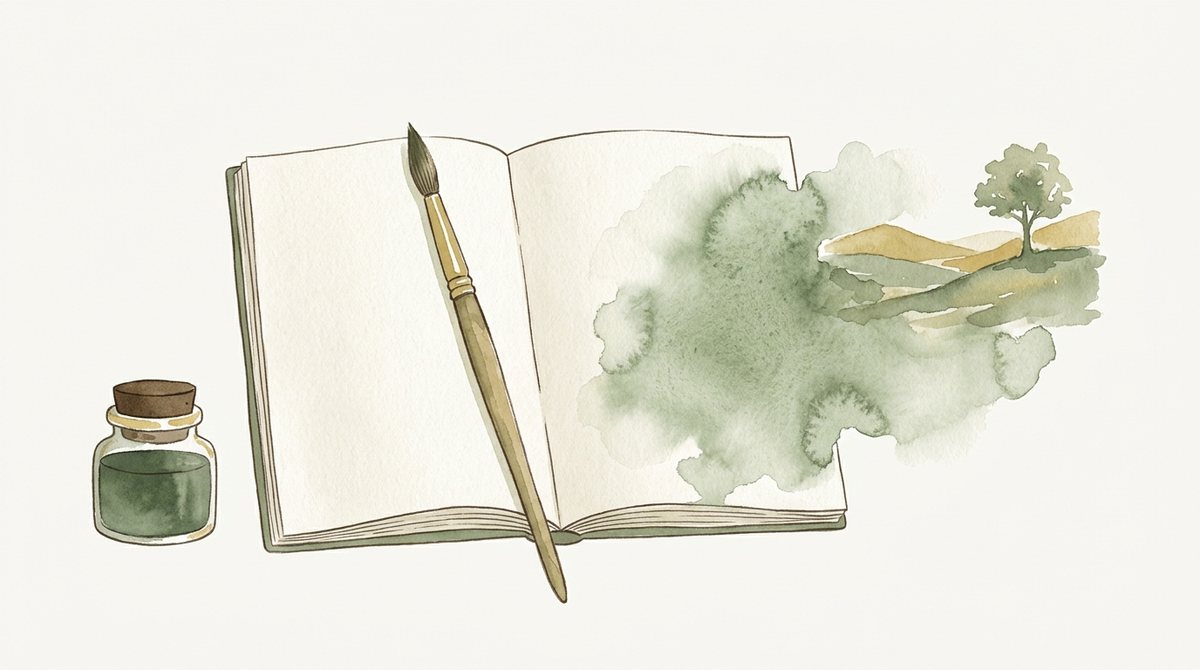
An illustrated journal gives your entry a visual payoff: you write about your day and get something to look at and keep — a collage, a sketch, or in the newest apps, an image painted from your words by AI. The payoff matters because it closes the reward loop a new writing habit is missing. Here is how the family works and what to look for.
Why a visual payoff helps the habit
The hard part of journaling is not the writing; it is returning tomorrow. The habit research says new habits take months to feel automatic, and the early weeks run on whatever reward the practice offers. A plain text archive rewards you eventually — months later, rereading. An illustrated journal rewards you tonight: the entry becomes something you can look at, share or just keep, and that is a reason to come back that arrives on day one rather than day ninety.
There is a quieter benefit too. An image made from your words is a mirror with some distance in it: the day reflected back as a scene rather than a transcript. People who find rereading their own words uncomfortable often find looking at their month entirely pleasant.
The three ways apps do it
- Scrapbook journals let you decorate entries yourself with photos, stickers and layouts. The art is yours, and so is the effort: on a tired evening the decorating is the first thing to go.
- Drawing journals make sketching the entry. Wonderful if you draw; a blank canvas is even more intimidating than a blank page if you do not.
- AI-illustrated journals paint the entry for you: you write, a model reads the words, and an image comes back. No effort beyond the writing, which keeps the habit cheap. The questions that separate good ones are below, because sending your words to a model is exactly the kind of trade that should be stated plainly.
What to look for before you commit
- A keepsake, not a slot machine. One image per entry, made from what you actually wrote, reads as a painting of your day. Unlimited regeneration until you like the output reads as an image generator wearing a journal’s clothes, and the writing quietly becomes a prompt box.
- A style that belongs to the app. A consistent visual voice makes a month of entries feel like one journal rather than a folder of AI images.
- The privacy sentence. What exactly is sent to the model, to whom, and is it stored or trained on? An honest app answers in its privacy policy.
- The words stay first. Writing should never be limited by the art budget: run out of images and you must still be able to write, save and export everything.
- A free tier you can actually live in, so the habit can form before any money changes hands.
Where Bloom Journal fits
Bloom is this family’s quiet member, for iPhone and Android. You write a few lines and a watercolour is painted from them — one painting per entry, in one consistent style, with a whispered line laid across it and a title of its own. While it paints, the app guides one slow breath. The free tier is livable on purpose: writing is never limited, three paintings a month with no daily cap, one “living painting” video, and full export, free forever. Your journal lives on your phone by default, and the Privacy Policy states the trade in one sentence: to paint an entry, the text of that entry is sent to our AI providers.
Write a few lines. Keep the painting.